

Murten – A Glimpse into History
Murten was first mentioned in the early Middle Ages as "Hof Muratum." The town was located in a strategically important area and was repeatedly destroyed and rebuilt. Under the Dukes of Zähringen, Murten received its distinctive rectangular layout.
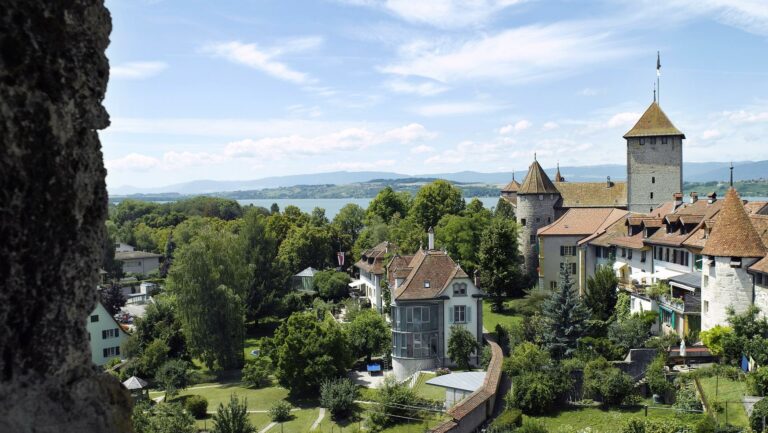
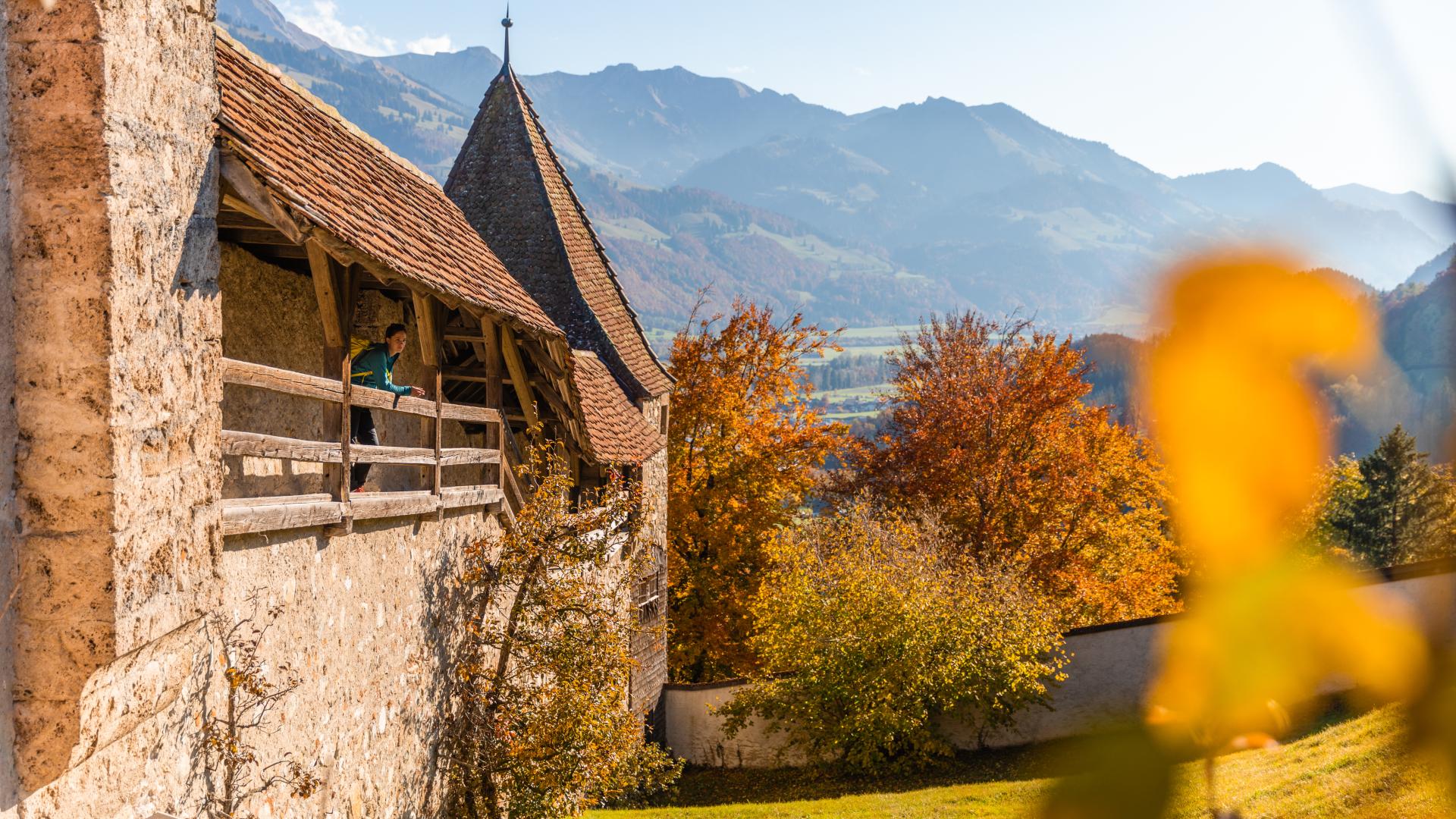
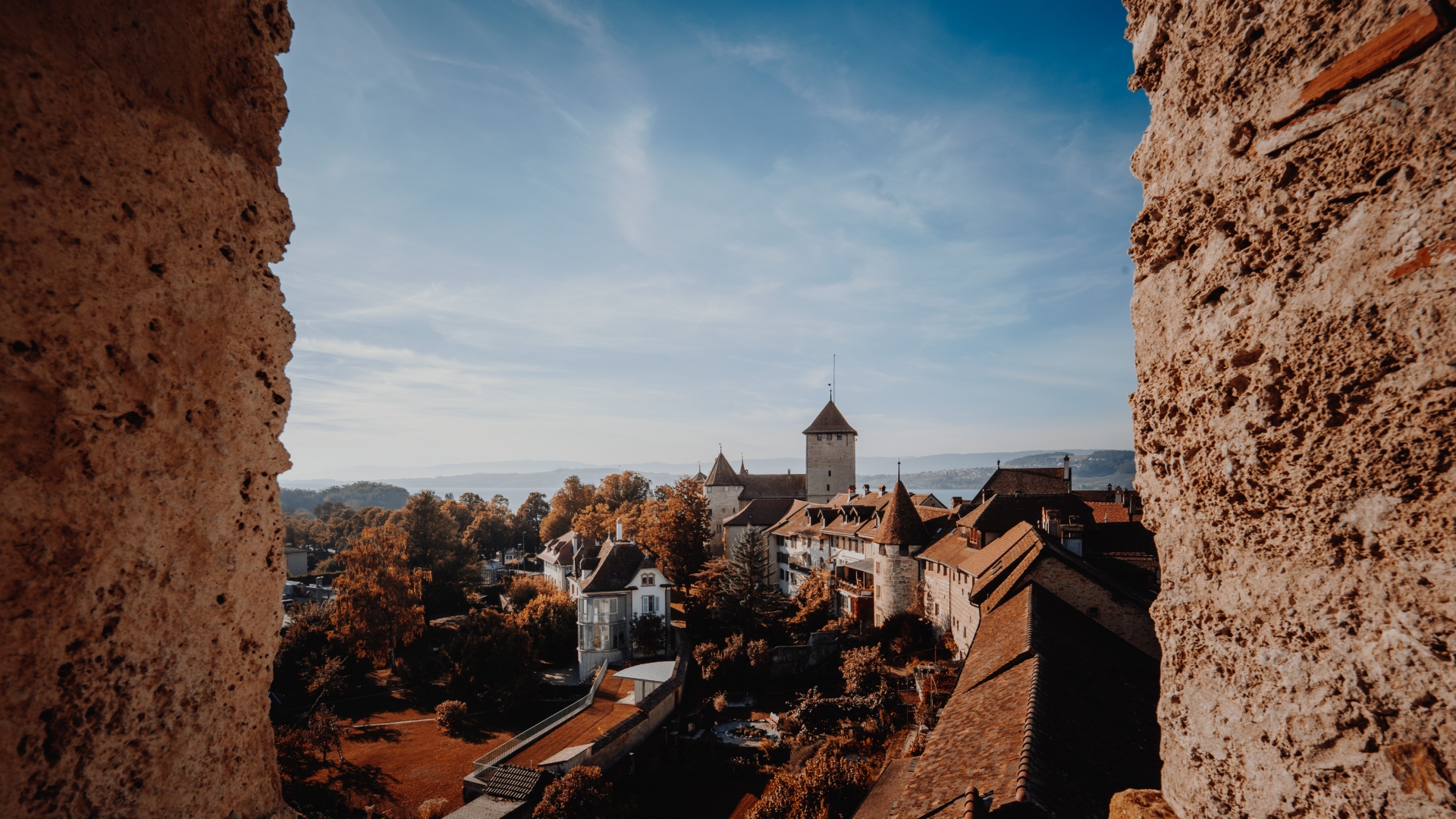
In the Middle Ages, Murten was an important border town between various territories. The city formed alliances with neighboring towns such as Freiburg and Bern. At the same time, a powerful ring wall was built, which still characterizes Murten today.
Murten played a central role in the Burgundian Wars and was successfully defended. The Battle of Murten is still celebrated annually on June 22. Afterwards, the town was jointly administered by Bern and Freiburg, with Bern responsible for civil matters and Freiburg for military affairs. This shared rule shaped the city for many years.
Bern introduced the Reformation in Murten, which influenced the town's cultural and linguistic development. The city gradually shifted from being French-speaking to predominantly German-speaking. Smaller neighboring villages gained municipal rights, and Murten retained its regional importance.
After the end of the old rule, Murten finally became part of the canton of Fribourg and was designated district capital. The town experienced social tensions but remained culturally and economically stable.
Murten grew through several municipal mergers and is today an important center on Lake Murten.
Historical Highlights
- 515 – First mentioned as the estate “Muratum,” later as a fortress in 1013.
- 1159–1179 – Founded by Duke Berthold IV of Zähringen as a western stronghold. After the Zähringen dynasty ended (1218), Murten became a Free Imperial City under Emperor Frederick II.
- 1255 – Protection treaty with Count Peter of Savoy.
- 1377 – City rights granted by Count Amadeus of Savoy.
- 1416 – Last major town fire; rebuilt in stone instead of wood.
- 1475 – Occupied by Bern and Fribourg, ending Savoyard rule.
- 1476 – Siege by the Burgundian army of Charles the Bold and decisive victory of the Swiss Confederates. The anniversary, June 22, is still celebrated as the Solennität (youth festival).
- 1484 – Murten becomes a joint bailiwick of Bern and Fribourg for more than 300 years.
- 1798 – French troops invade.
- 1803 – Napoleon assigns Murten permanently to the canton of Fribourg.
Further insights into Murten’s history can be found at the Museum Murten.
Murten - Today
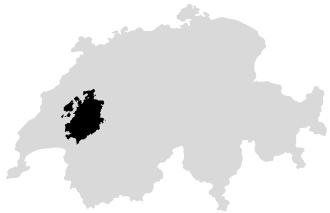
Murten is located between Bern and Lausanne and is the capital of the Lake District (Seebezirk) in the canton of Fribourg.
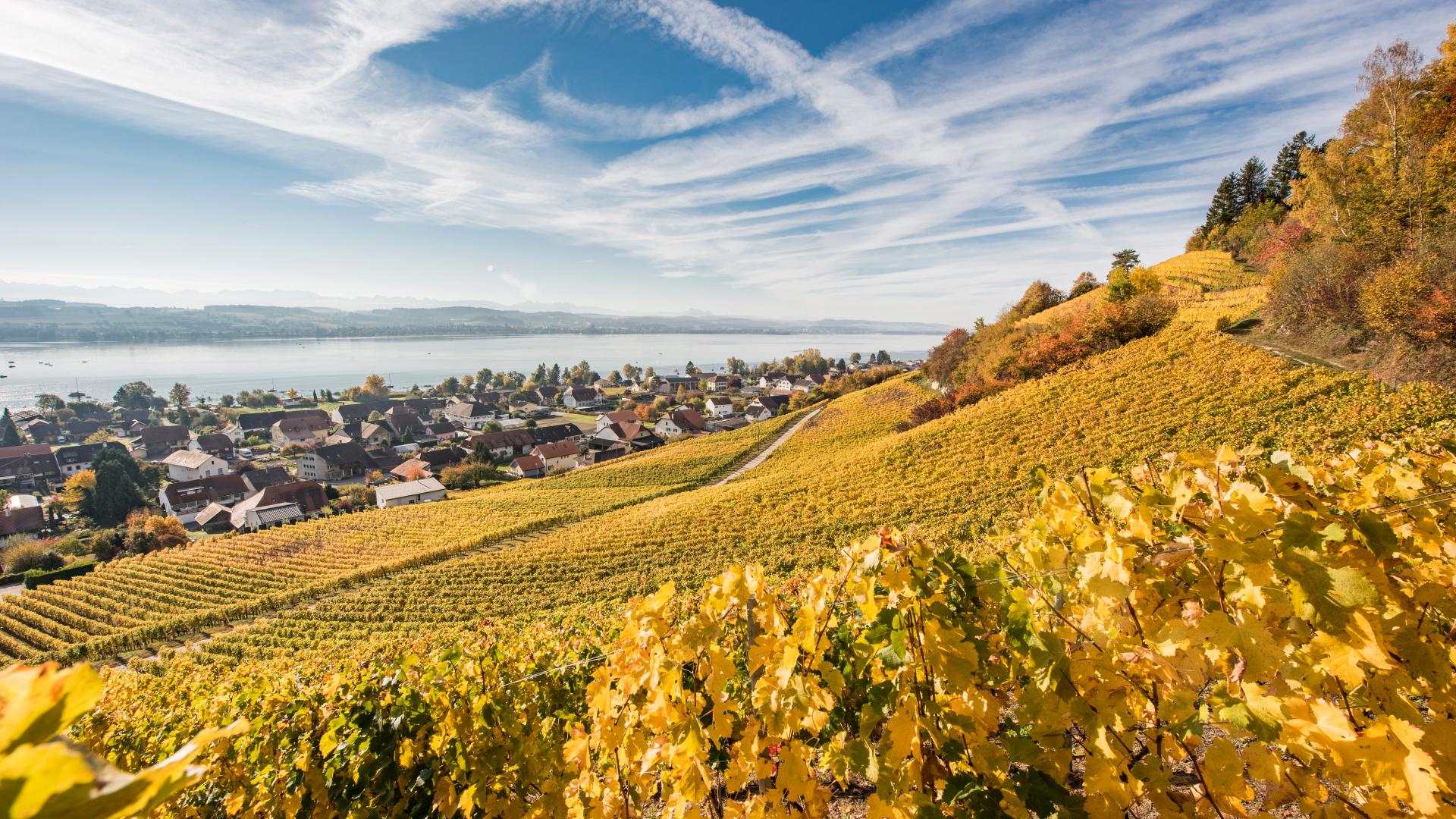
This medieval town lies on the Swiss Plateau, at the edge of the Great Marsh (Grosses Moos), on 450 m above sea level directly on the shores of Lake Murten.
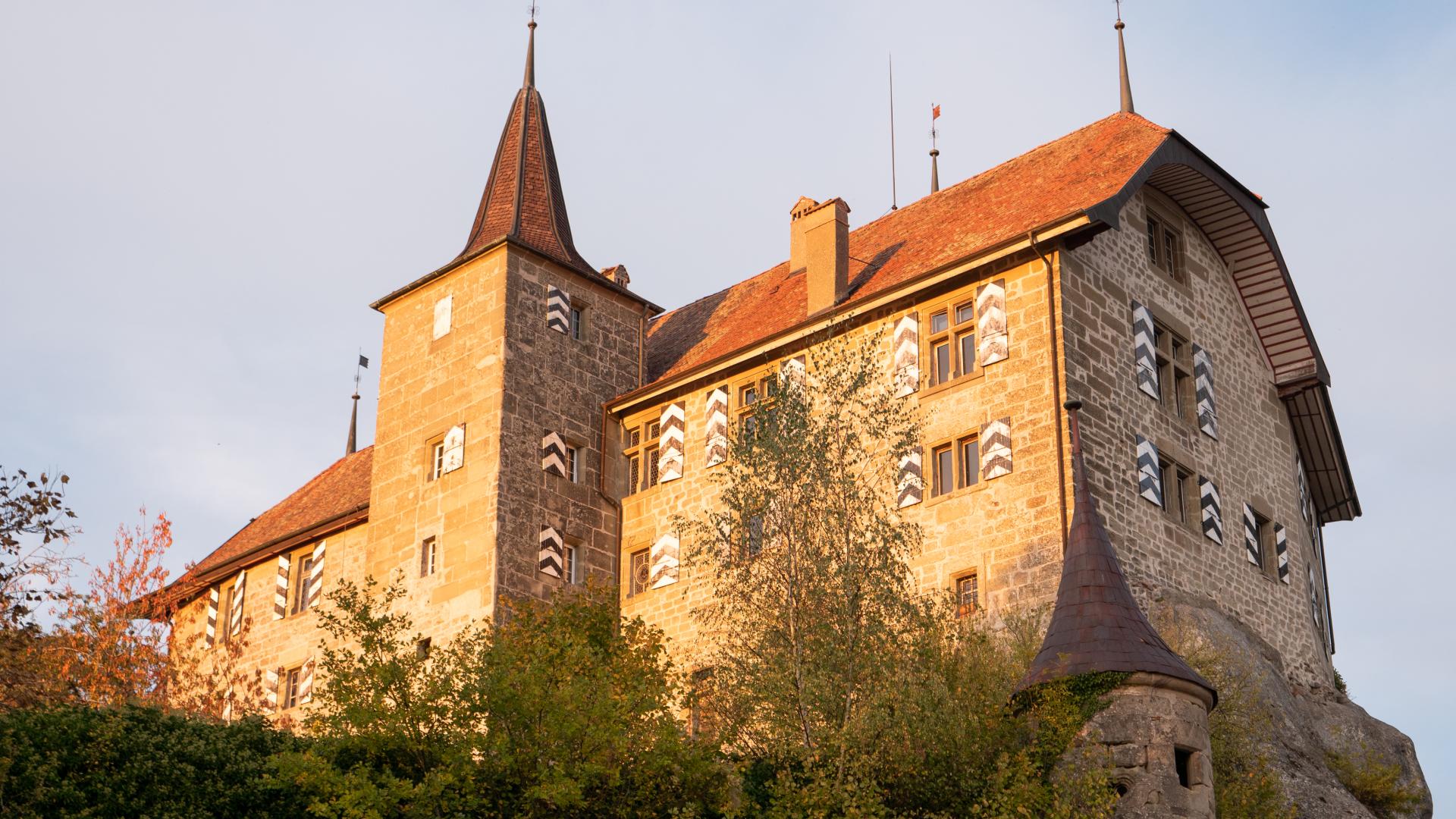
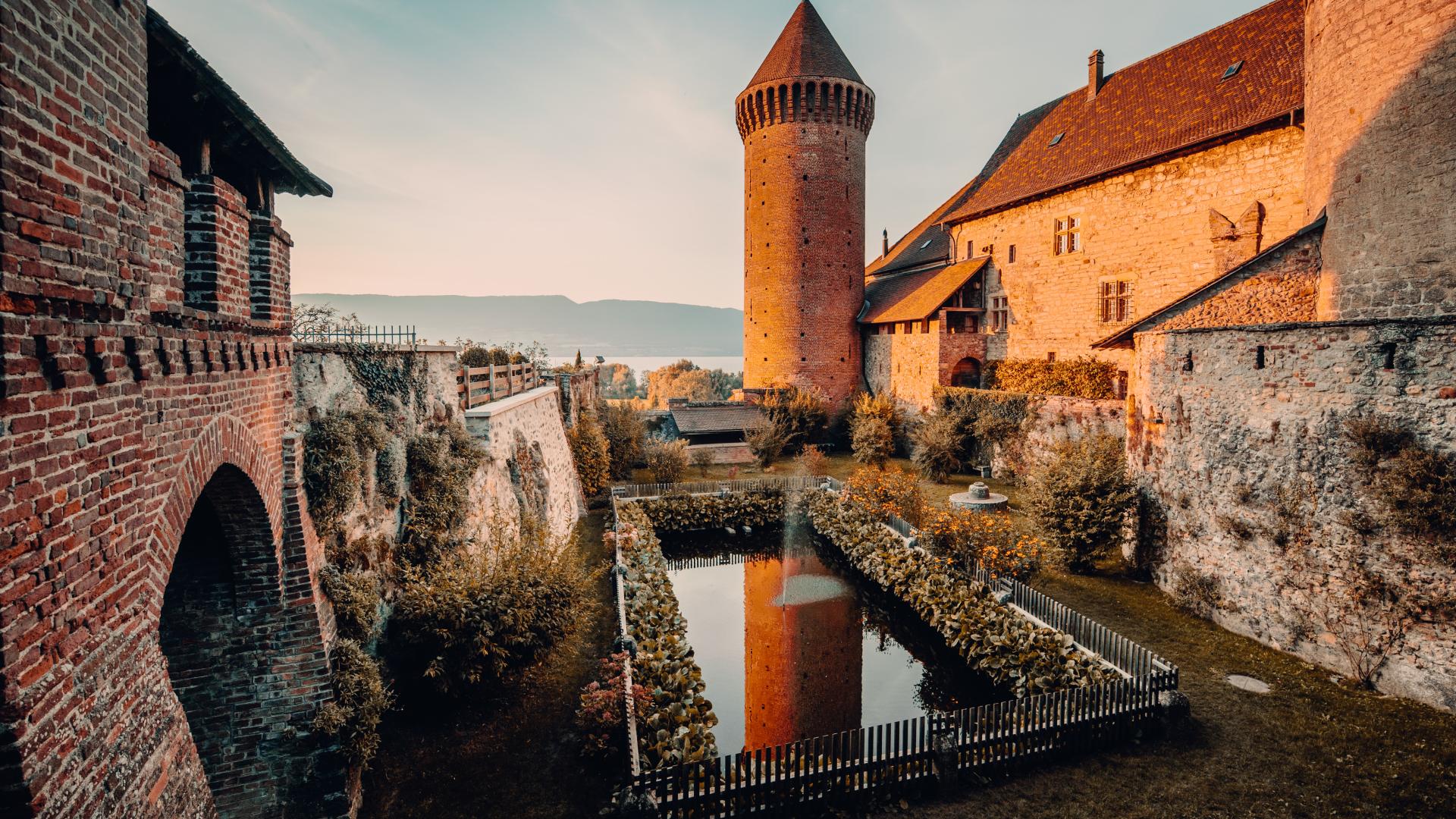
With around 9,630 residents (as of 01/01/2025), Murten is a lively bilingual town: 73% of the population speaks German and 14% French. The well-preserved old town, with its castle, ring walls, arcades, and distinctive streetscape, reflects a rich and eventful past.
Its unique location, historic architecture, and cultural diversity form the backdrop to the town’s history.
Region Murtensee / Région Lac de Morat
Hauptgasse 27
3280 Murten