

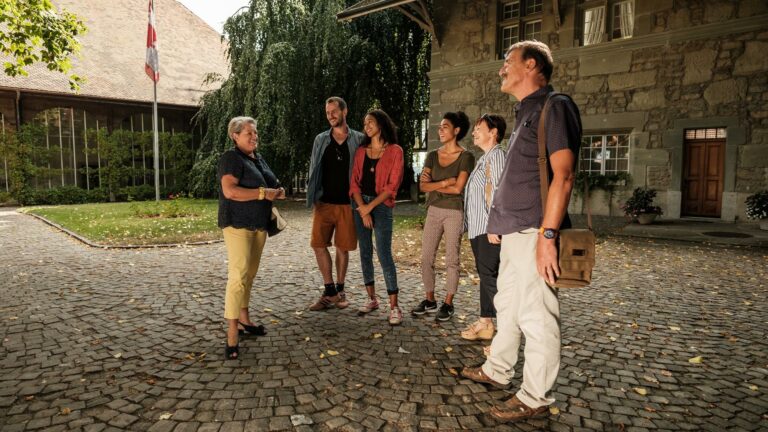

Connecting Fribourg to Romont, this stretch passes through two towns shaped by the history of the pilgrimage to Santiago de Compostela.
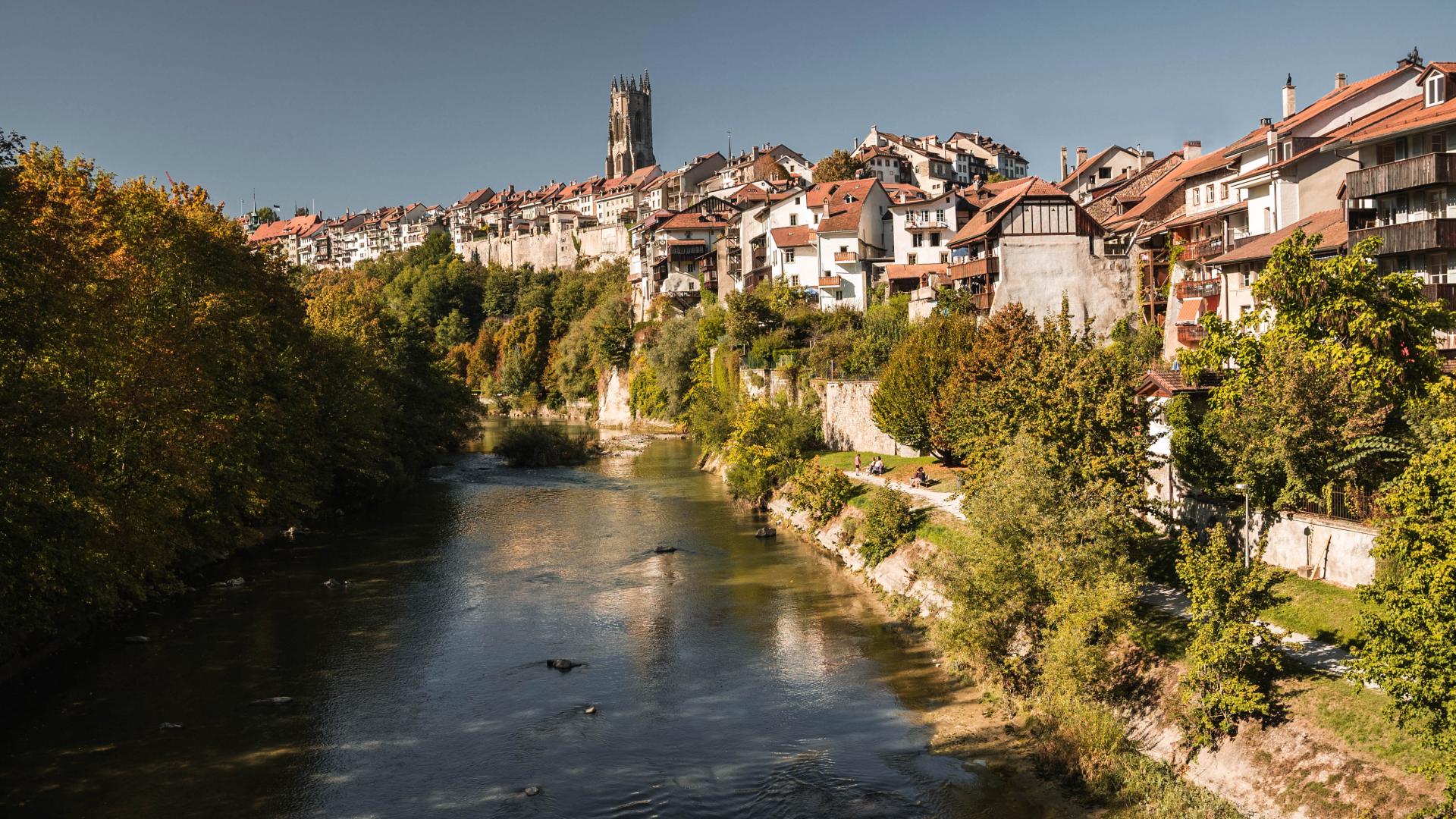
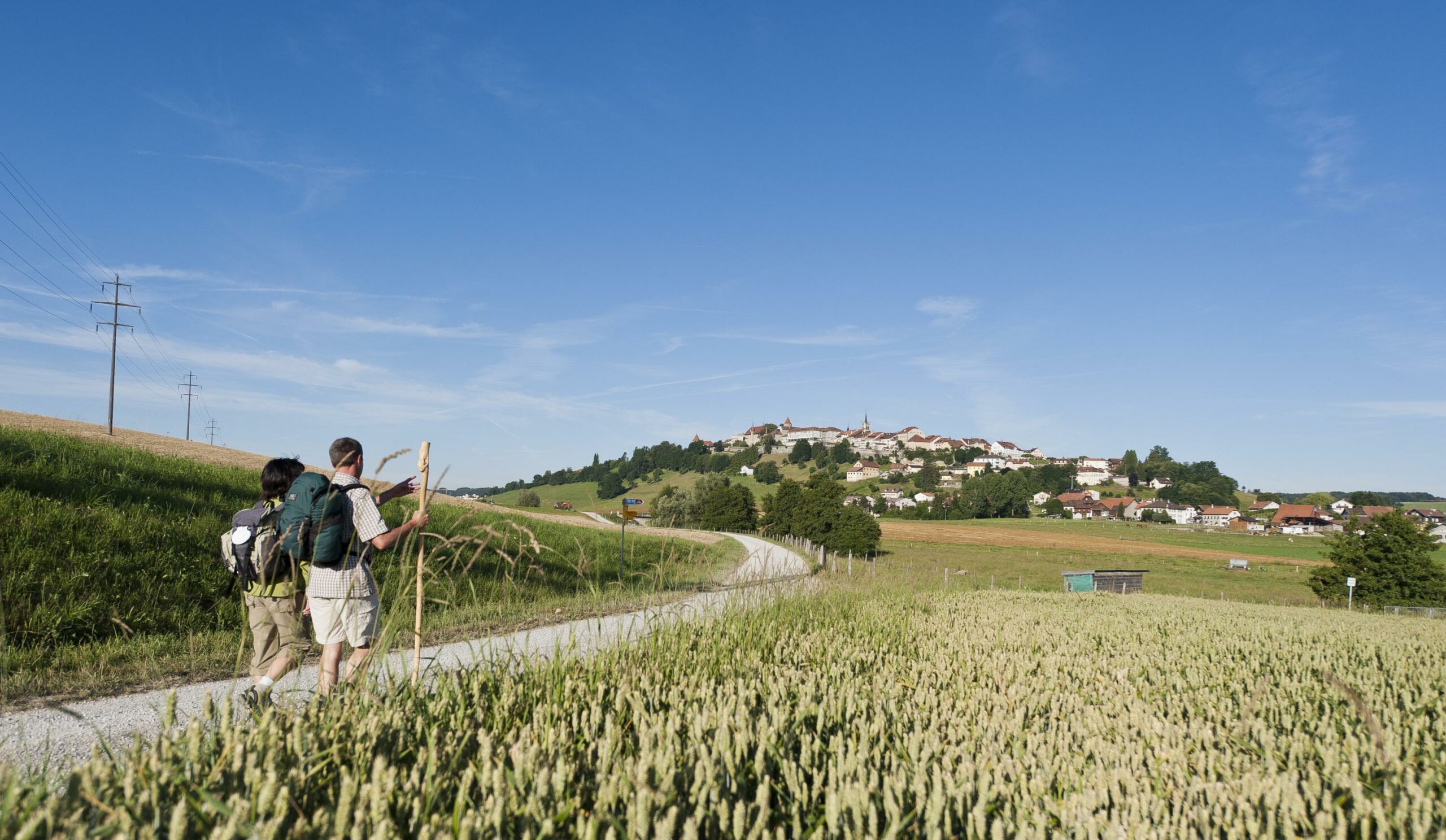
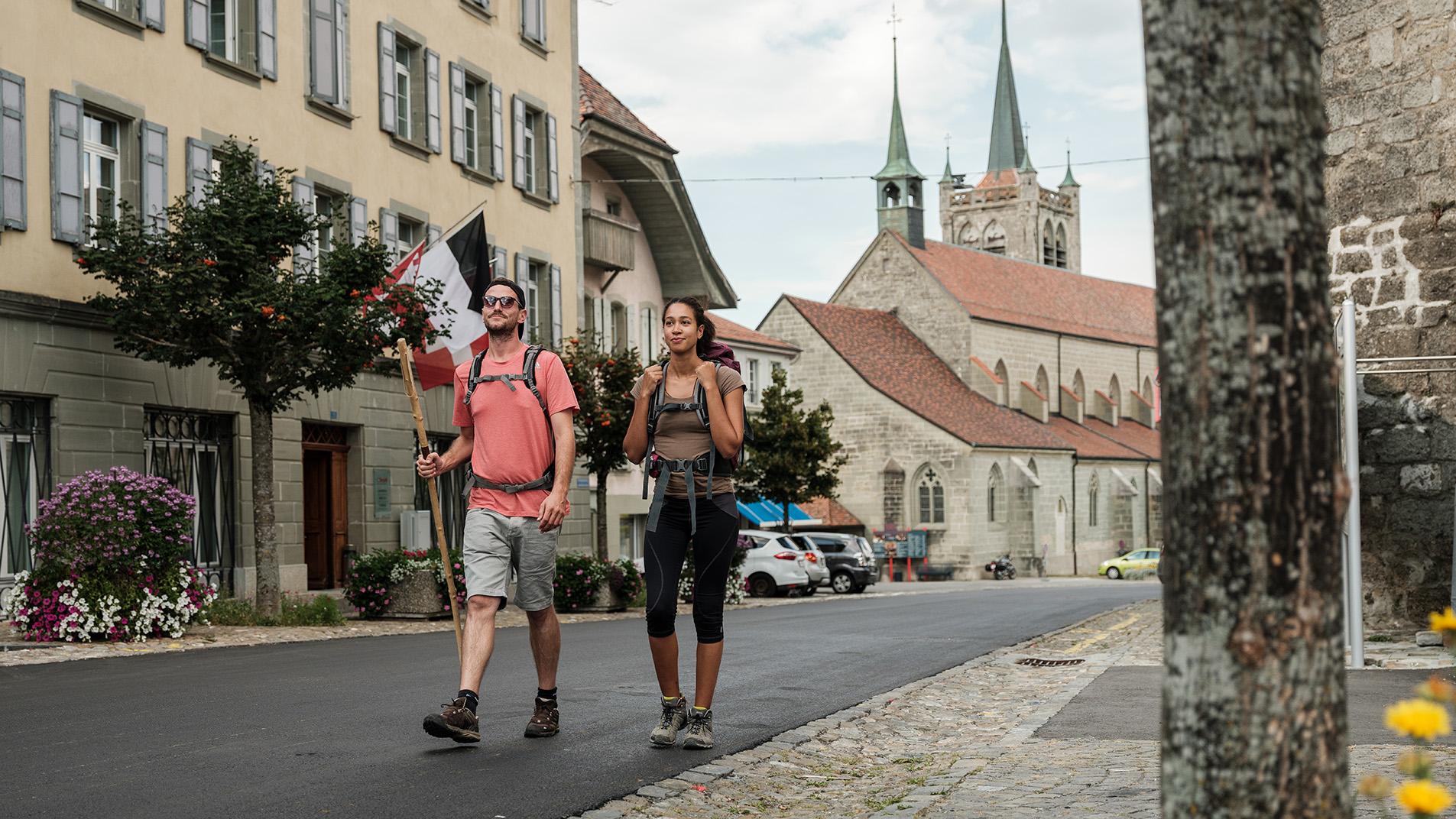
Fribourg, a city founded by the Zaehringen, is worth a visit for the richness of its heritage. The journey begins with a crossing of the Ste-Apolline Bridge, a stone structure spanning the Sarine, whose origins date back to 1243; the adjacent chapel, dated 1147, shares its founding year with the Abbey of Hauterive. Exiting Monterban, you will walk along an avenue lined with ancient oaks, the last witnesses of the old Great Path connecting Fribourg to Bulle. The trail continues after a wooden footbridge to Posieux, then Ecuvillens and its aerodrome. Midway through the journey, a detour to the Notre-Dame de Posat chapel is a must, dating back to 1680. A path carved into the molasse then leads to a second footbridge, this time over the Glâne. In Chavannes-sous-Orsonnens, the altarpiece of the St-Jacques chapel is worth a glance. On the outskirts of Romont, you will pass by the Abbey of La Fille-Dieu, a Cistercian foundation from 1268, whose church was completely restored in 1996. The arrival is in the old town of Romont, a true kingdom of glass, present in the collegiate church, the streets, and of course at the Vitromusée, the Swiss museum dedicated to stained glass and glass arts.
Good to know: in Fribourg, take the time to explore the Old Town and visit St-Nicolas Cathedral. Once in Romont, the Vitromusée remains a must-see in the region.
Accessible by public transport: yes
Accessible by car: yes
Fribourg: Bridge and Chapel of Ste-Apoline
Hauterive: Cistercian Abbey of Hauterive
Posieux: Chapel of Posieux
Ecuvillens
Posat: Chapel of Posat
Autigny
Chavannes-sous-Orsonnens: Chapel
Chavannes-sous-Romont: Abbey of La Fille-Dieu
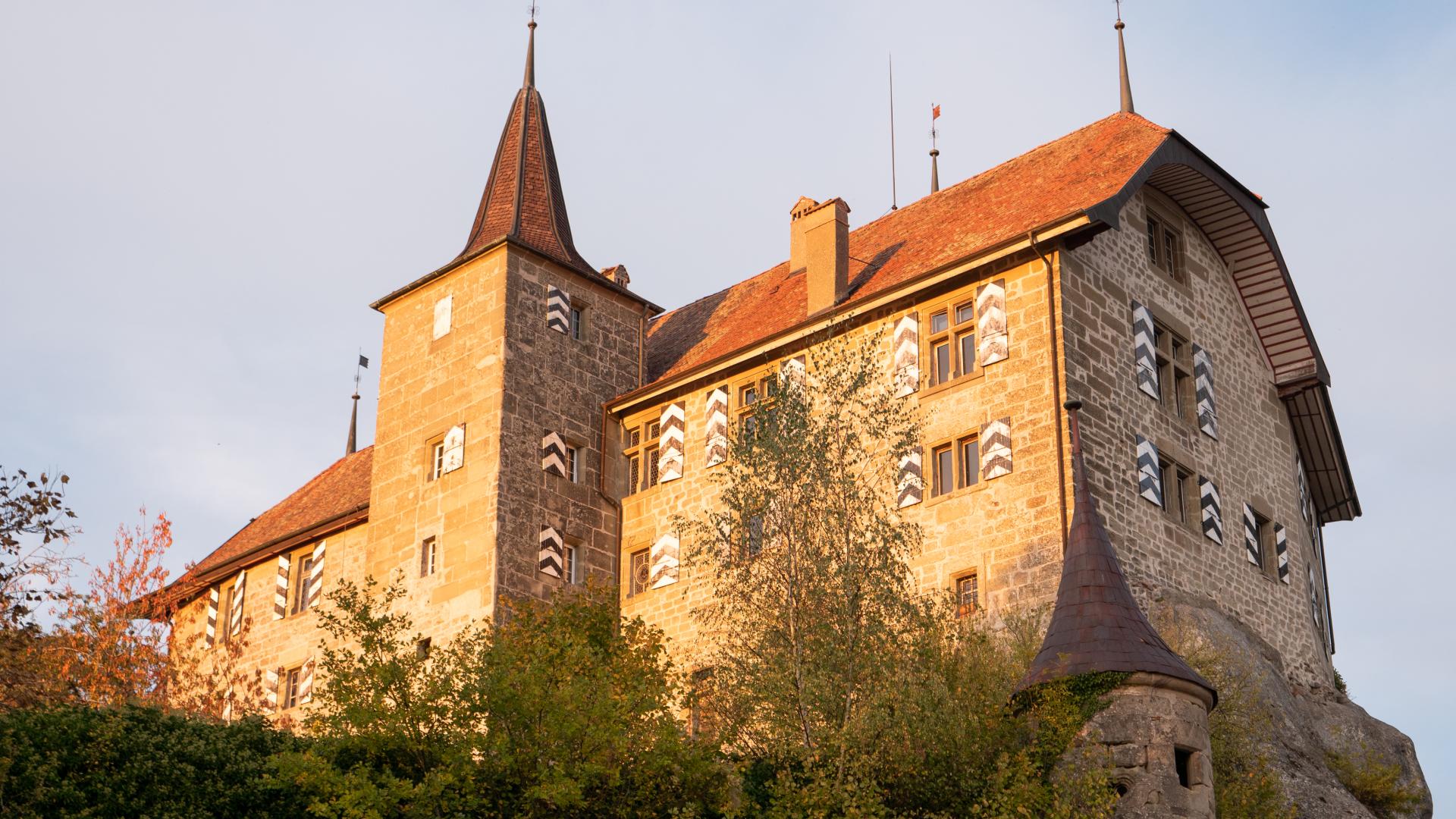
Romont: Castle and Vitromusée, Collegiate Church of Notre-Dame de l'Assomption

Properties of the itinerarie
Difficulty: Challenging
Duration: 07:00
Distance: 28 km
Ascent/Descent: +802m / -617m
Altitude min./max.: 571m / 769m