



The Garden of the Capuchins
In 1348, at the request of its bourgeoisie, Bulle was endowed by the Bishop of Lausanne with a hospital and a chapel dedicated to the Virgin. After the fire of 1447, the complex was rebuilt and the chapel was consecrated in 1511.
The devotion to Our Lady of Pity or Compassion is ancient, unlike the Bulle pilgrimage. The latter only developed from 1640 with the arrival of a cleric from the Congregation of the Oratory, Dom Claude Mossu. Miracles occurred, and pilgrims flocked to venerate the statue of the Virgin, depicted seated, with her dead son on her knees.
Upon Dom Mossu's death in 1665, two Capuchins were called – provisionally – by the citizens of Bulle. The relocated hospital was replaced by a small convent (for twelve religious); it was established "in perpetuity" in 1679.
Enlarged to its current dimensions in 1688, the chapel, whose choir was directly owned by the Vatican, the nave belonged to the Bourgeoisie of Bulle, and the convent to the Excellences of Fribourg. The sanctuary serves the dual function of a conventual church and a pilgrimage sanctuary. An impressive baroque altarpiece was created in the choir by the bullois sculptor Pierre Ardieu and his workshop between 1692 and 1701.
The Order of the Capuchin Friars adheres to the rule of Saint Francis of Assisi. The Capuchin Friars lead a life of poverty, marked by prayer and manual work, rejecting all personal property. Unlike a cloistered order, they maintain close ties with the population and the city, perfectly in tune with this urban sanctuary, open to the central square and the activities unfolding there.
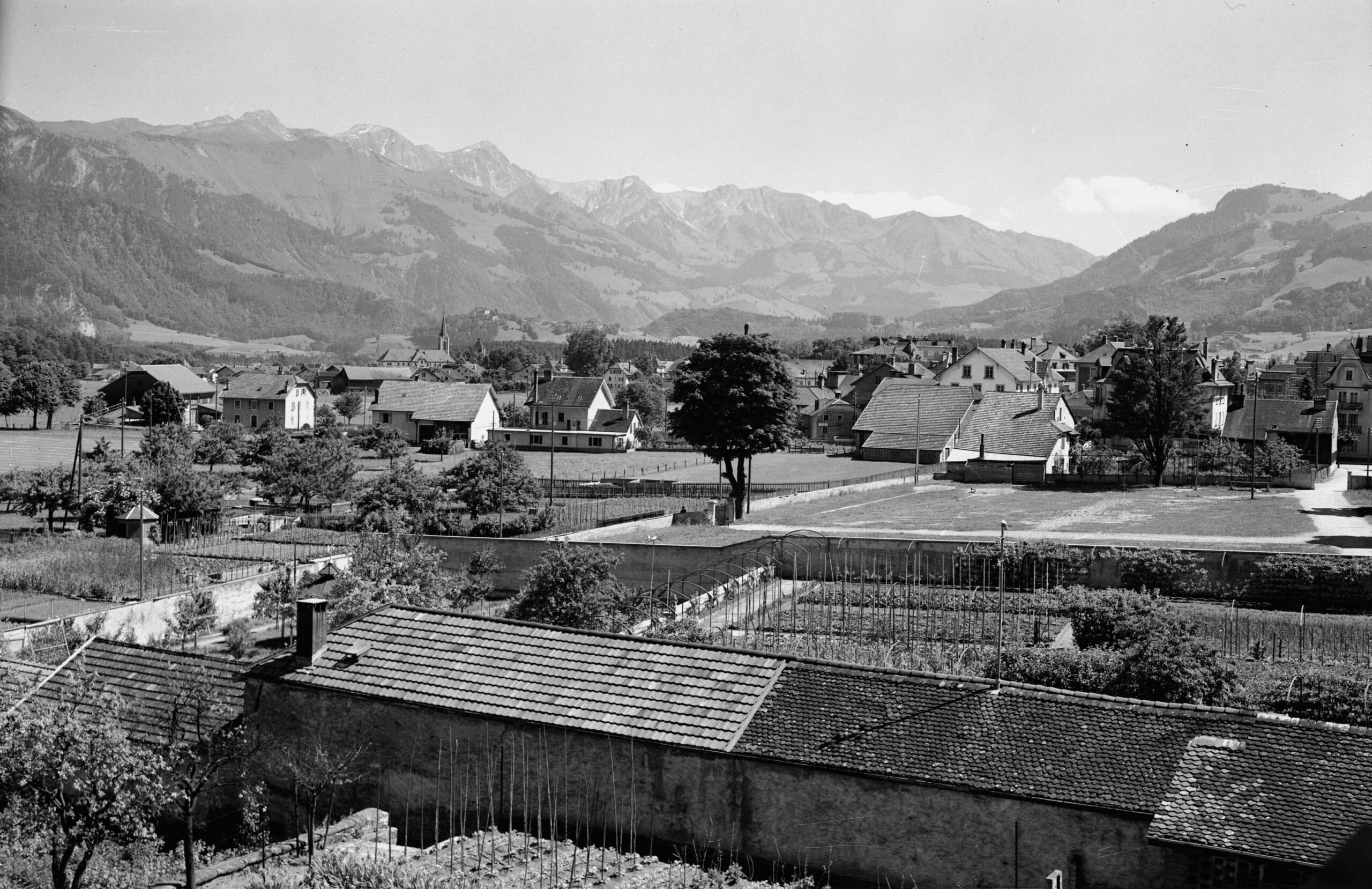
A large garden adjoins the chapel to the south of the buildings. It continues the vegetable garden of the former hospital. Organised according to a traditional cross-shaped plan, the garden is the place where the brothers cultivate a "herb garden". They grow mallow and marshmallow to soothe coughs, calendula to heal wounds, as well as mint, lemon balm, and sage. These medicinal plants are used to prepare remedies and herbal teas, highly appreciated by the locals; thus reinforcing the role of healers attributed to the Capuchins within the city. But the garden is also a vegetable garden where the religious cultivate essential vegetables for their sustenance, such as parsnips, Jerusalem artichokes (which can still be found today at the foot of the castle walls), as well as beans and purple peas – referred to as "Capuchin peas" – a variety specifically associated with the religious order of the Capuchins.
The most unique element of the site consists of a snail farm where the religious raise snails. Considered aquatic animals, their consumption is permitted during Lent, a forty-day period before Easter characterised by days of complete fasting and days of abstinence (lean days). A well-established tradition (over 400 years) holds that the Capuchins invite regional authorities to a meal featuring snails at mid-Lent. This custom continues to this day in the city of Fribourg, where the State Council is invited each year by the Capuchin Friars for the sauerkraut with snails.
After more than three centuries of presence, the Capuchin Friars left Bulle in 2004. The important religious, scientific, and scholarly library was integrated into the heritage collections of the Fribourg Cantonal and University Library. In 2019, a significant rehabilitation project of the garden allowed for the revival of this historic site, now owned in its entirety by the parish of Bulle-La Tour. Since 1 July 2020, the Jardin des Capucins has been open to the public during the day. On the upper level, the cultivated areas, still organised according to a cross-shaped plan, structure a shared space maintained by private individuals under the auspices of the Fribourg Red Cross. The organisation regularly offers gardening workshops and intercultural meetings, while the surrounding buildings serve as a logistical base for hosting volunteers.
This place also preserves its spiritual dimension: by taking the stairs down to the lower level, visitors access a chapel, a space for reflection dedicated to Saint Francis of Assisi. The former snail farm was once located on the left side of this lower level, in the small covered and ventilated building.
Information
Musée gruérien
Rue de la Condémine 25
1630 Bulle
La Gruyère Tourisme
Centre commercial Velâdzo (rez inférieur)
Place de la Gare 3
1630 Bulle