


From the tree-lined promenade to the city market
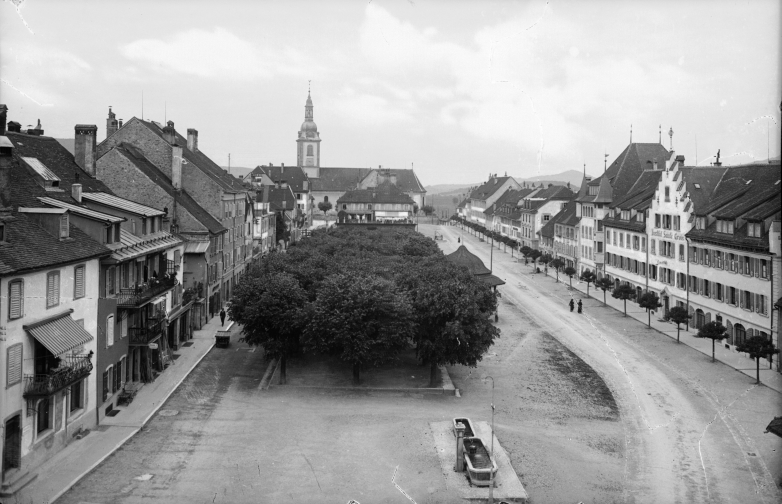
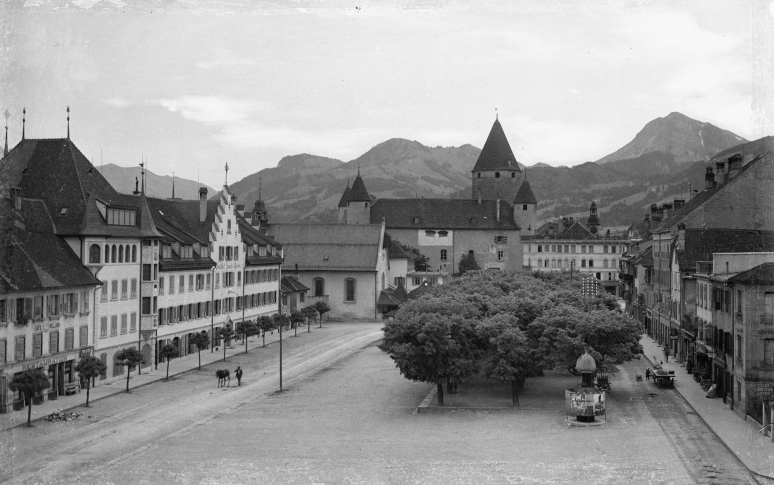
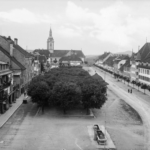
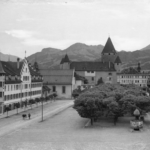
Before the fire of 1805, the area of what is now the Market Square was occupied by a row of houses that were not rebuilt. From this vanished 3rd row, only the Halls and the adjoining houses remain up to the metal awning that faces the square. This choice aimed to facilitate trade, beautify the city, and, above all, prevent the spread of future fires by creating a safety zone. It was therefore a strategic decision that met the needs of the city. They developed what was called, in the 19th century, a “promenade”: a space planted with trees, enhanced by a water feature, designed for strolling and wandering. This creation was part of a European trend where green spaces became tools for social reform and public hygiene. In England, the idea of municipal parks open to all was formulated as early as 1830 by John Claudius Loudon, while in Switzerland, initiatives like the creation of the public promenade in Lausanne in 1826 marked this evolution towards public relaxation spaces.
In the early 20th century, the Promenade Square was redesigned and enhanced, in 1907, with a music kiosk. This small open stage, erected thanks to the proceeds of a festival organised by the City Music Corps, reinforces the role of the square as a sort of “urban salon”.
The choice of tree species, mainly plane trees and then linden trees, reflects the desire to create natural halls. These trees provided – and still provide – an indispensable canopy of freshness to protect perishable goods from the sun’s rays and regulate the local microclimate during hot weather.
The role of the trees in this square is multifaceted. Historically, their strict alignment served as a natural firebreak to protect the new city centre while delineating the space between the central commercial area and the promenades. Acoustically, the foliage breaks the resonance of sounds against the façades, creating a muffled atmosphere, particularly during concerts held at the kiosk.
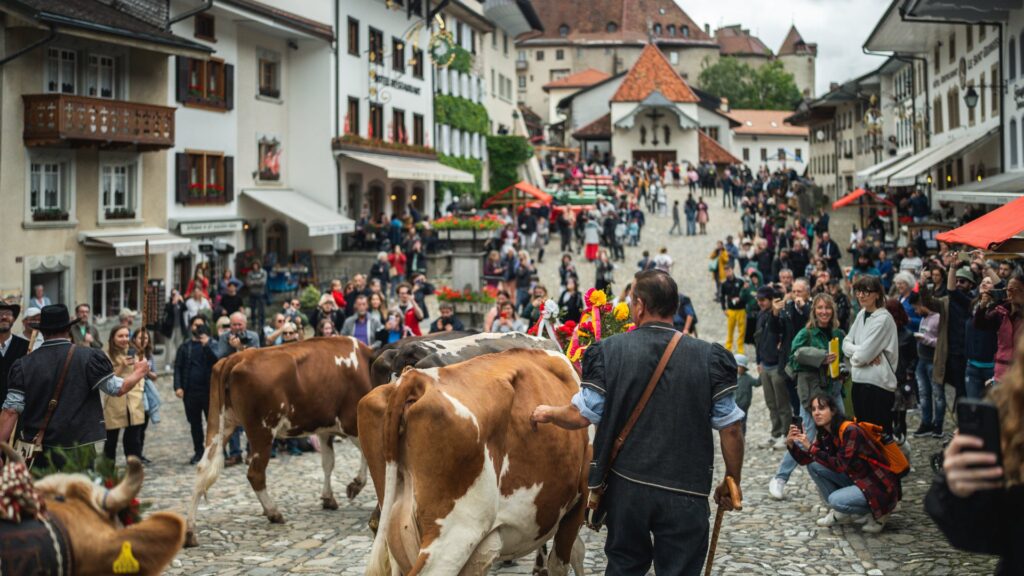
Today, the Promenade Square – or Market Square – remains the beating heart of the weekly market (Thursday mornings and Saturday mornings), where fruits, vegetables, and food products are sold. It bears witness to the former commercial organisation of the city: while the sale of local products is concentrated here, the sale of livestock historically took place at Place Saint-Denis and that of small animals at the “Little Market Square”, which is located at the northern end of the current Market Square. A living reminder of the reconstruction of Bulle, this vast treed square continues to strengthen social ties by providing citizens with a meeting and trading place in the city centre. The Café de la Promenade, by its name, maintains the memory of one of the functions attributed to this square after the fire of 1805.
Information
Musée gruérien
Rue de la Condémine 25
1630 Bulle
La Gruyère Tourisme
Centre commercial Velâdzo (rez inférieur)
Place de la Gare 3
1630 Bulle